A metabolic vascular axis redefines therapeutic targeting in rosacea erythema
Keywords:
rosacea erythema, alpha-ketoglutarate, OXGR1, vascular smooth muscle, metabolic signalingAbstract
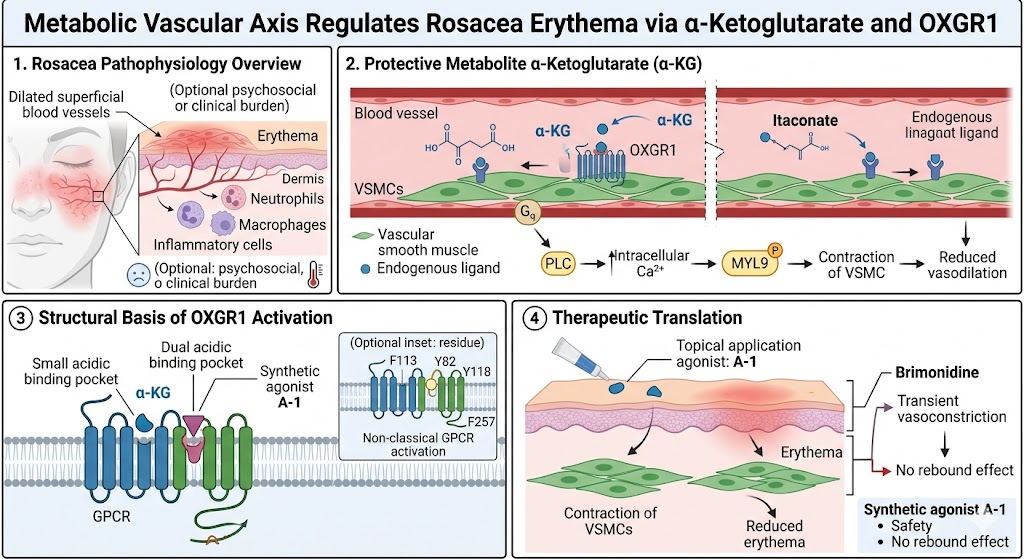
Rosacea is a highly prevalent chronic inflammatory skin disorder that affects millions of individuals worldwide [1], with persistent facial erythema representing its most defining and therapeutically challenging feature. Despite its substantial clinical burden, which includes psychosocial distress and reduced quality of life, long-term control of erythema remains difficult to achieve. Current therapies, such as topical α-adrenergic agonists [2] including brimonidine, primarily induce transient vasoconstriction but are limited by short duration, rebound erythema, and local adverse effects. These shortcomings reflect a deeper gap in the field, namely an incomplete understanding of the molecular mechanisms that drive pathological vasodilation. A recent study [3] published in Cell provides a conceptual advance by identifying a previously unrecognized metabolic vascular signaling axis centered on α-ketoglutarate, its receptor OXGR1, and downstream Gq MYL9 signaling. By integrating clinical metabolomics, mechanistic biology, structural analysis, and drug development, this work establishes a coherent framework linking metabolic adaptation to vascular tone regulation. Similar to recent advances in other biomedical fields that connect microenvironmental signals with disease mechanisms, this study reframes rosacea erythema as a metabolically regulated and therapeutically tractable process rather than a purely vascular abnormality.
Downloads
 All site content, except where otherwise noted, is licensed under a