Sensory neuroimmune signaling opens a new precision medicine window for Stevens–Johnson syndrome and toxic epidermal necrolysis
Keywords:
Stevens-Johnson syndrome, toxic epidermal necrolysis, neuroimmune signaling, CGRP, RAMP1Abstract
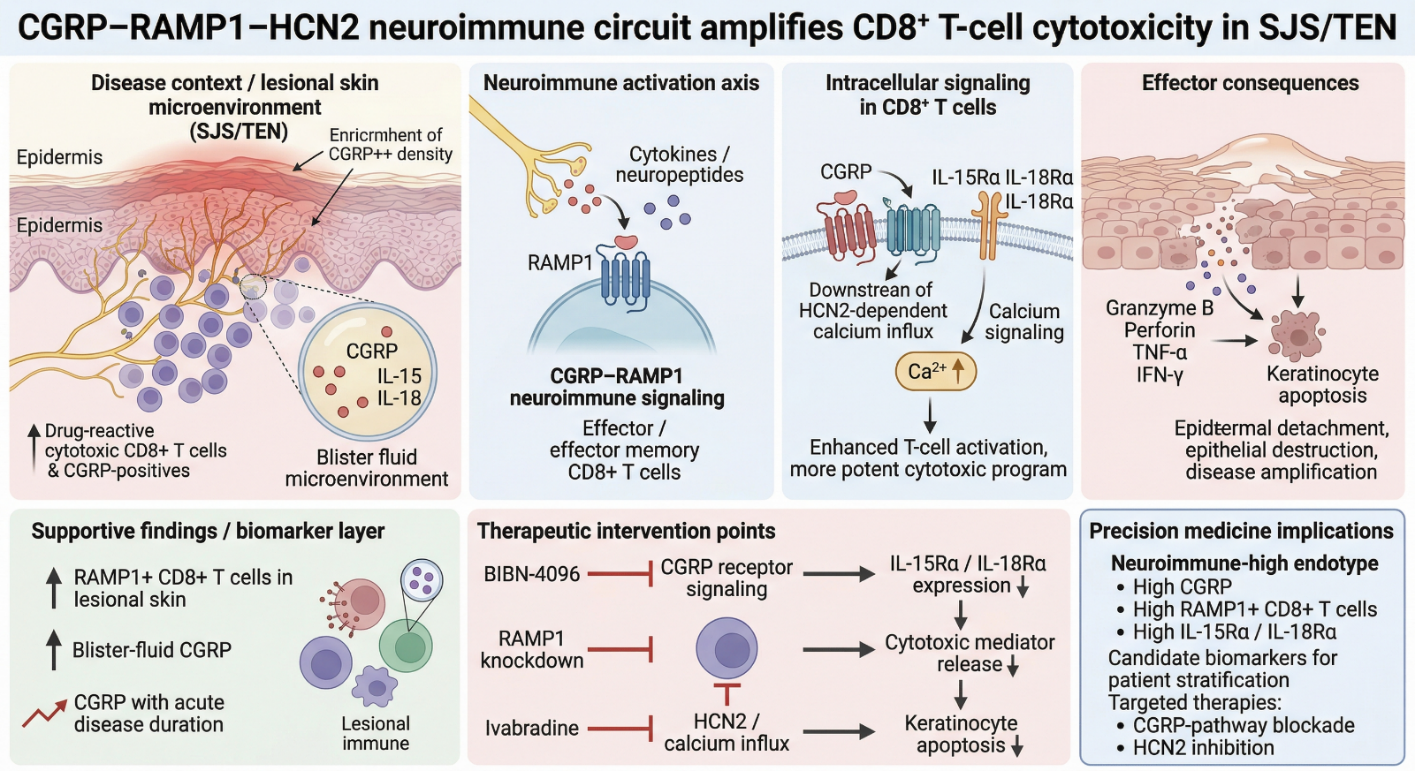
Stevens–Johnson syndrome and toxic epidermal necrolysis (SJS/TEN) remain among the most devastating forms of severe cutaneous adverse reactions [1]. Although substantial progress has been made in understanding the immune basis of these syndromes, especially the central role of drug-reactive cytotoxic CD8+ T cells, the mechanisms that sustain tissue injury after the initial drug-triggered immune activation remain incompletely understood. In this context, the study by Huang and colleagues provides an important conceptual advance by identifying a sensory neuroimmune circuit that amplifies CD8+ T-cell cytotoxicity in SJS/TEN [2]. Their work places calcitonin gene-related peptide (CGRP), its receptor component RAMP1, and the downstream HCN2-dependent calcium signaling pathway at the center of a previously underappreciated mechanism linking nociceptive neural activation with persistent epidermal destruction. This is not only biologically intriguing, but also highly relevant for translational and precision medicine-oriented thinking in severe drug hypersensitivity.
Downloads
 All site content, except where otherwise noted, is licensed under a