Why Domain Adaptation Fails on Well-Harmonized Survey Data: A Paired Bootstrap Evaluation of CORAL Across NHANES Cycles
Abstract
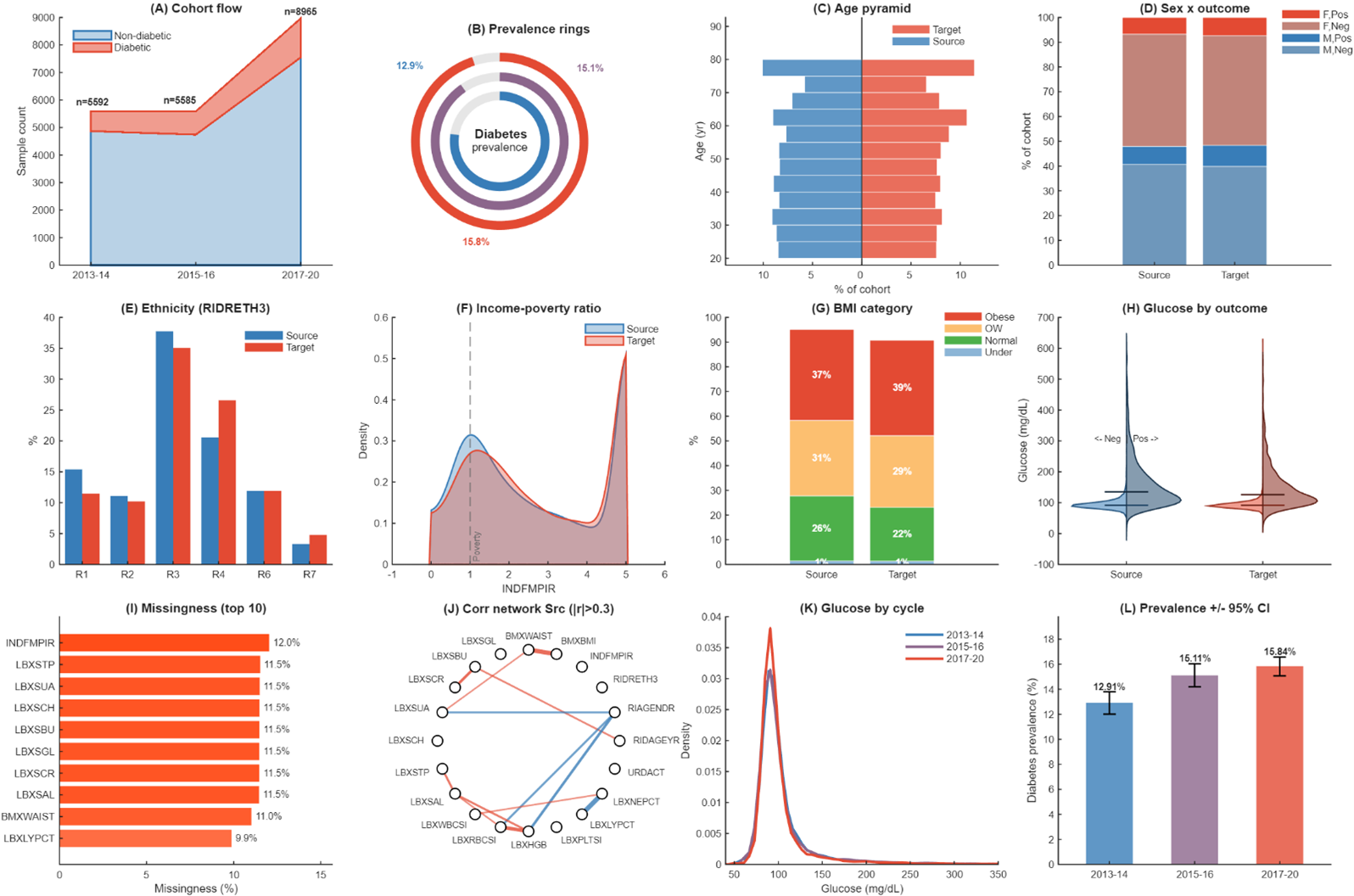
This study evaluated the utility of CORAL domain adaptation for cross-cycle diabetes prediction using 20,142 adults from three NHANES cycles spanning 2013 to 2020. Despite CORAL reducing covariance mismatch by over 99%, the actual cross-cycle feature drift was minimal, with fasting glucose shifting by only D=0.07 and the most notable deviation confined to serum albumin, likely reflecting a laboratory calibration artifact rather than a biological change. As a result, the unadapted gradient-boosting baseline lost only 0.0012 AUC when transferred to the later cycle, while CORAL and all other alignment variants systematically degraded performance, with CORAL costing an average of 0.0058 AUC and a paired bootstrap p-value below 0.001 across 300 resamples. The findings suggest that the strong upstream harmonization built into NHANES renders aggressive second-order domain adaptation unnecessary and mildly counterproductive. The authors recommend treating the unadapted baseline as the default on well-harmonized longitudinal survey data, and establishing a paired bootstrap noise floor before deploying any adaptation method.
Downloads

Downloads
Published
Versions
- 2026-04-23 (2)
- 2026-04-23 (1)
 All site content, except where otherwise noted, is licensed under a